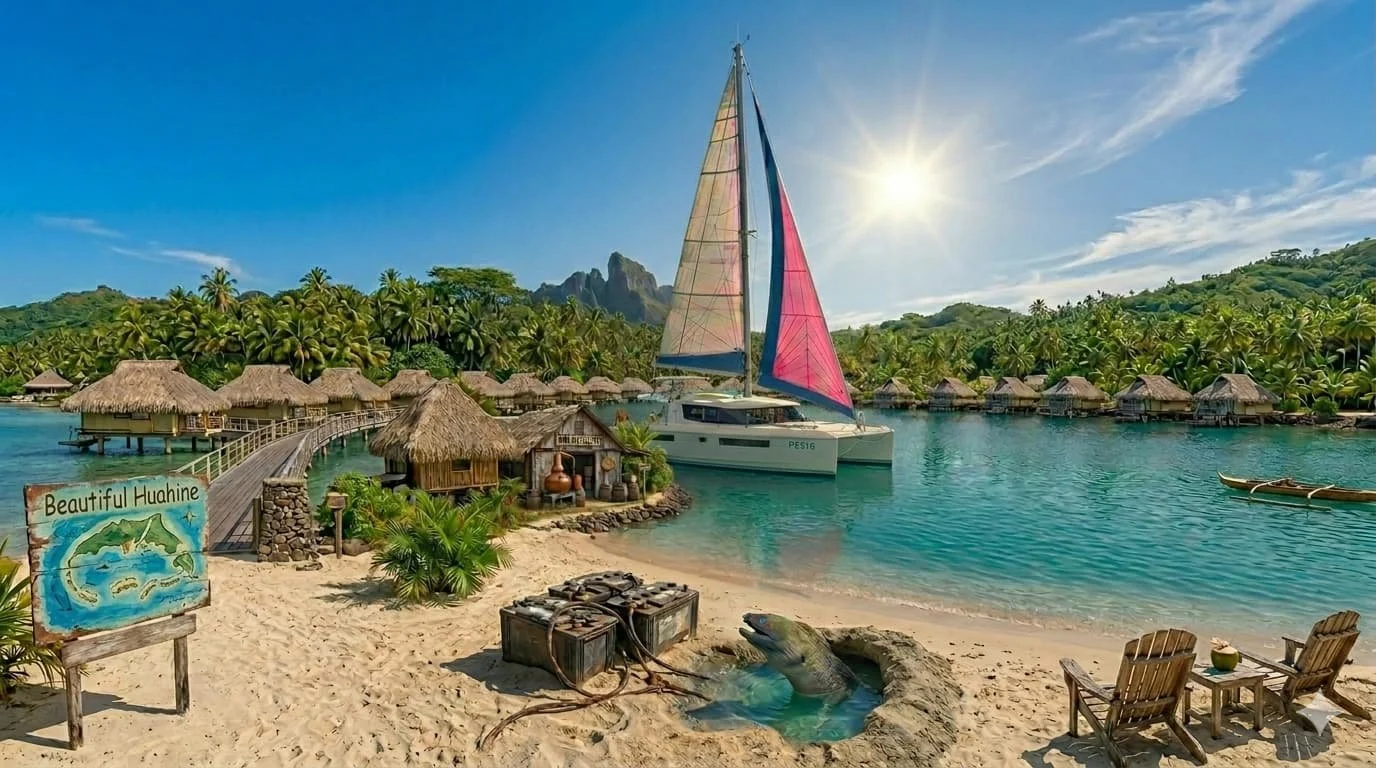
Beautiful Huahine
We were finally leaving the marina. Marinas are interesting places; over time, you develop a love-hate relationship with them. There is the convenience of being able to step off the boat, grab a baguette for lunch, and enjoy air conditioning whilst doing the inevitable boat jobs. On the other hand, you can’t jump in for a swim to cool off, you don’t get the cooling breeze, and being a catamaran, you lose your privacy (I have to keep reminding Simon to put on clothes). After several days, it was time to leave the security of the dock. We had our new outboard delivered, the hatch and window leaks fixed, and the final release form signed. The past few days had been windy, but according to Predictwind, the winds had since dissipated. We decided to take Felis ‘the reef’ anchorage for a couple of days before heading to Huahine. We motored out of the marina to discover it was a bit windier than predicted. We knew the anchorage was shallow, but without the depth calibrated, we had no idea how much clearance we had under our keel. When we saw zero on our depth, we decided to anchor in a deeper section. By now, the wind was gusting to 20 knots, so we put the anchor down, only to find that we were too close to the boat behind us. Deciding to lift our anchor and try again, we discovered our windless has stopped working. So we had no choice but to stay where we were. We then tried to make water, but we kept getting an error, not a great start to the day.
We contacted Moorings to see if they could assist with identifying the problem. Asking if the engine was turned on wasn’t helpful. Fortunately, the next morning, they sent out a technician. It was the solenoid…of course. They also fixed our water maker, so we were back to being self-sufficient. We planned to leave for Huahine the following morning, so we decided to stay in our current anchorage spot. As with all well-thought-out plans, we didn’t account for the wind dropping out. I got up at around 4 am to do a routine anchor check. After alerting Simon, nd discovered we were 5 meters from the monohull anchored next to us. Si kept watch for the remainder of the night, and at 7.30 am, we successfully brought up our anchor and headed for Huahine.
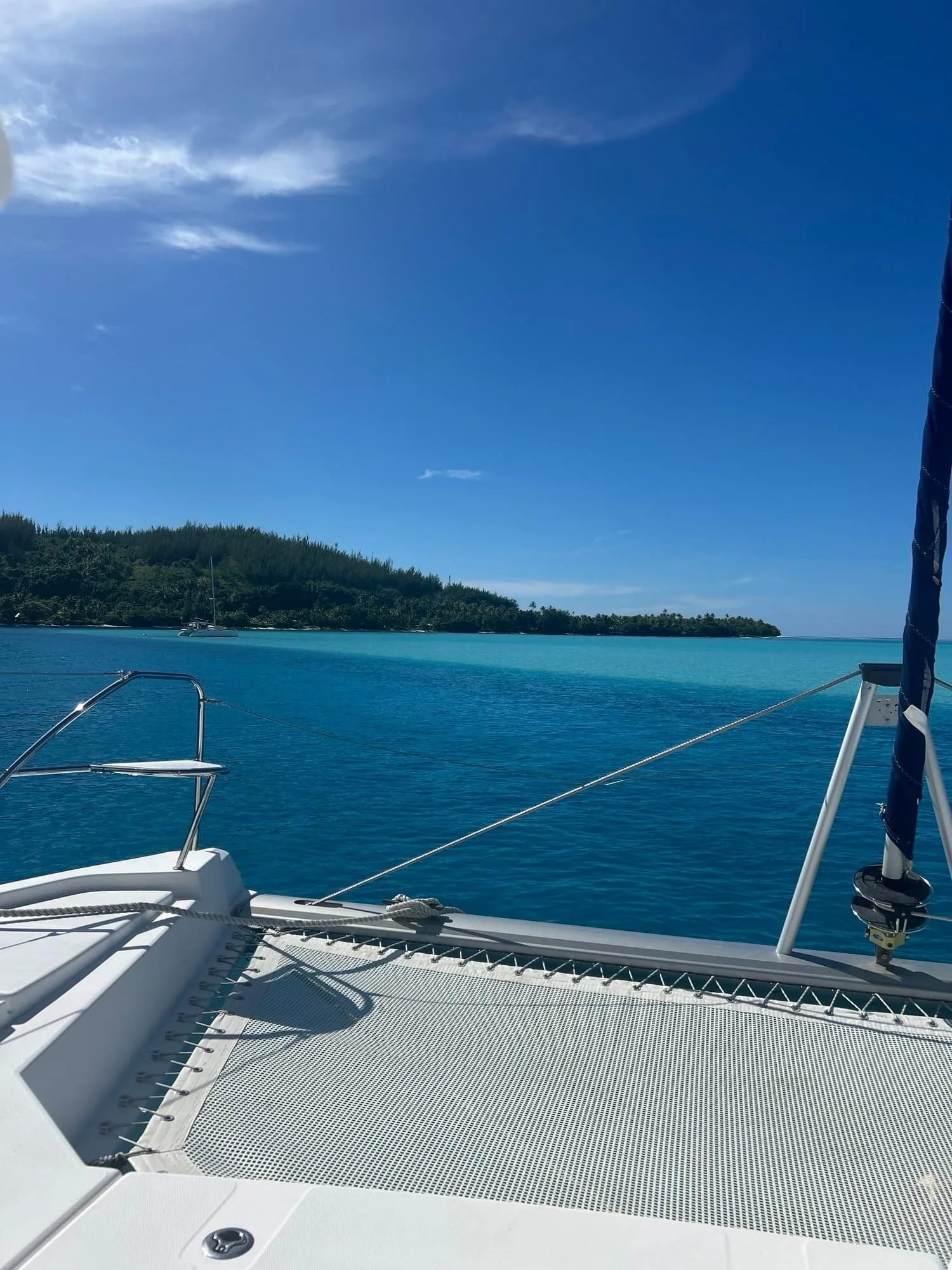
The passage was relatively uneventful, except that I was a little too ambitious and attempted to make pizza dough. The rolling swell made me a little queasy, but nothing a little lie down couldn’t fix. Did I mention the pizza tray wouldn’t fit in the oven? It is always the little things that push you to tears… but Simon quickly found an alternative, so the crisis was averted. By this time, we had entered the pass and made our way into the Huahine lagoon. Like all the islands in the Society Islands, a reef encircles the island, making the waters calm and the spectrum of blue ranging from sapphire to turquoise and cyan, depending on depth. Words do not do the colours justice as the water ripples in the sunlight.
We slowly made our way to the south of Huahine to Avea Bay. This was to become our backyard for the next eight nights. Apart from the uncertainty of who owned the mooring ball and how long we were allowed to stay, it was the perfect place to relax and start on the long list of boat jobs. French Polynesia is in the process of reducing anchoring across all the islands and installing moorings. They are in a transitional period, with legislation in place that outlines specific anchoring/mooring areas with a 48hr limit. But the moorings have yet to be installed, so there is some uncertainty about how long you can stay in one location.
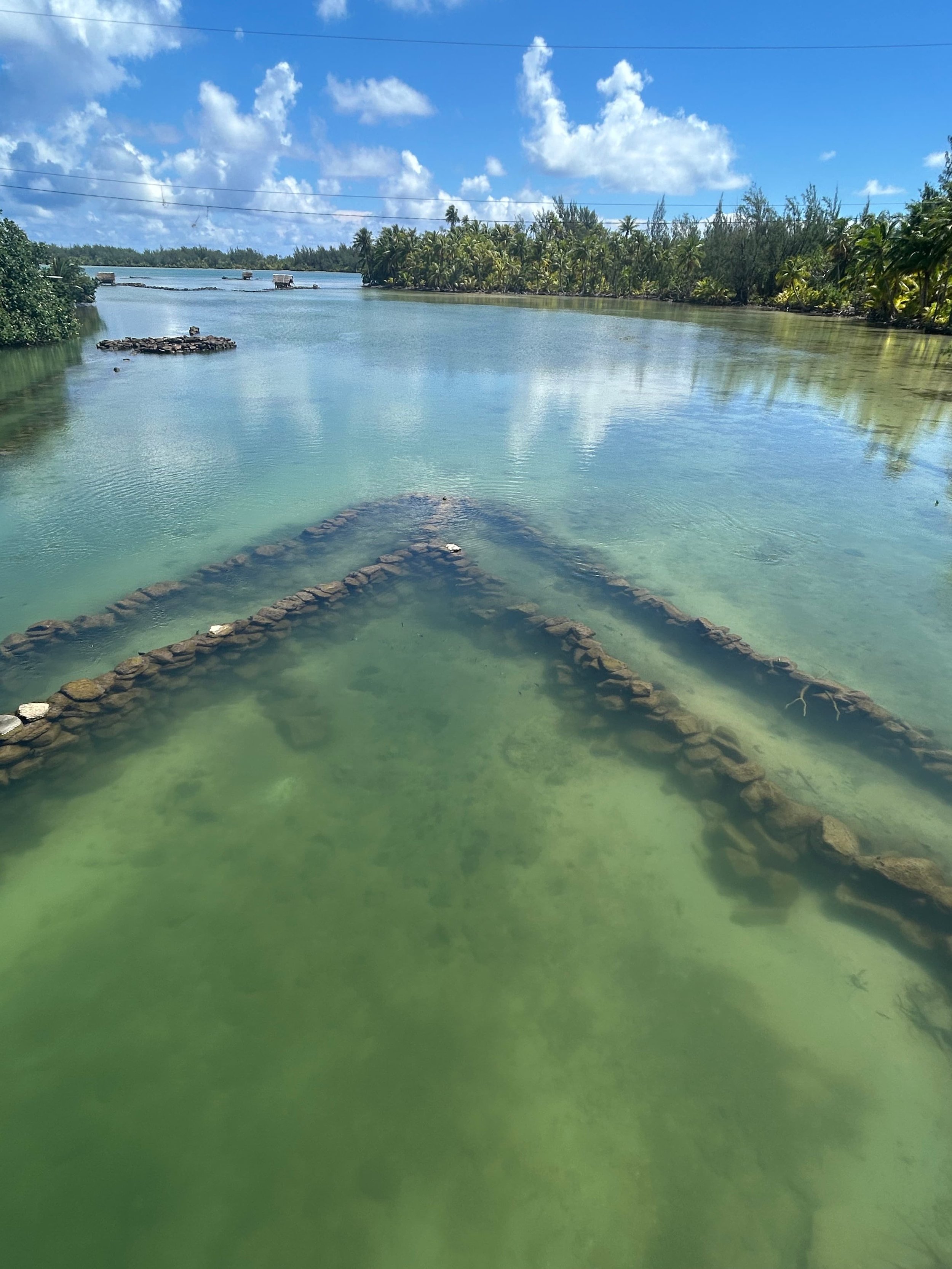
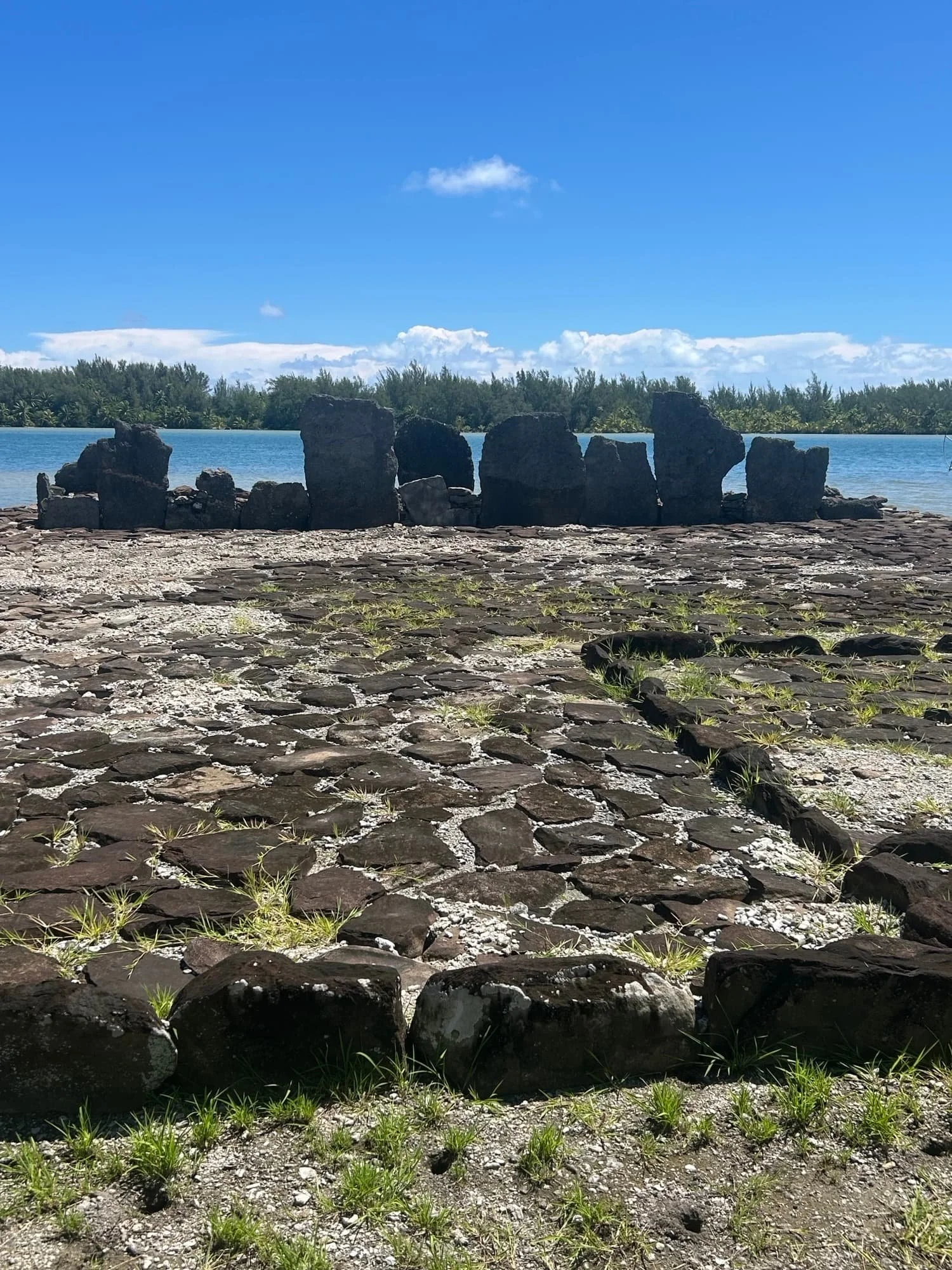
That aside, Avea Bay was stunning, with cliffs surrounding the bay, covered in a dense tropical masterpiece of green trees and coconut palms. As a bonus, there was a cruiser-friendly resort where we could take the dinghy and enjoy lunch. We hired a car for the day to explore the island, and I will admit it is one of the most beautiful and historically rich islands we have explored in French Polynesia. We visited ancient Marae Manunu (temple), the reconstructed Fare Pote'e museum, and centuries-old stone fish traps still in use. Simon walked down to the creek to feed the sacred blue-eyed eels (I was happy to watch from the creek bank). We had lunch at the yacht club and did a tasting at the local distillery, which uses local fruits to produce rum and other liquors. No trip to town would be complete without a visit to the supermarket to stock up on freshies.
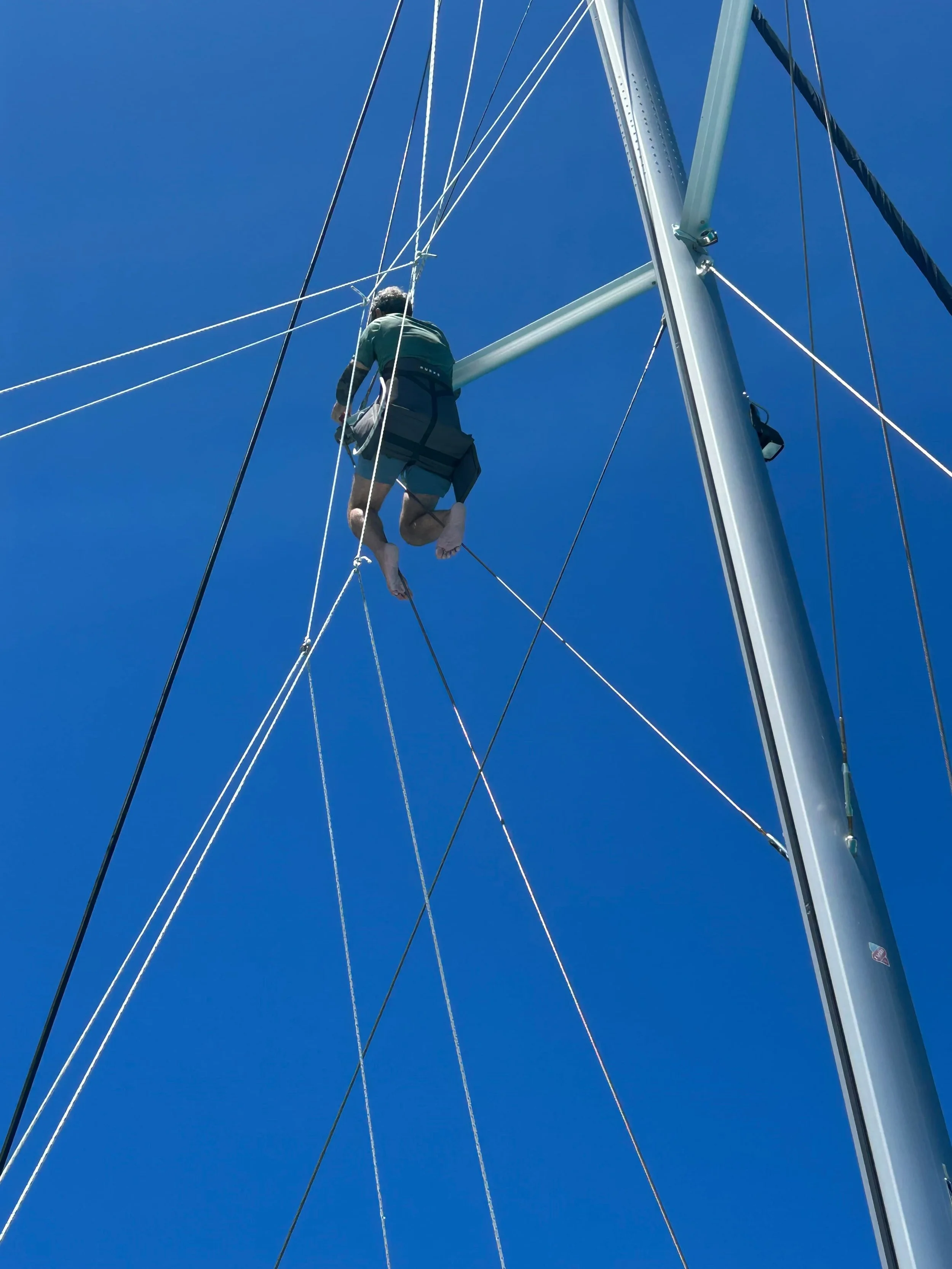
During our time in Huahine, we realised we had an issue with our batteries. They were not holding their charge, so we were running the generator three times a day, often at 5 am. Not conducive to a lie in. So it was time to head back and see if we could get our batteries replaced. On the way to the passage, we anchored in a lovely spot in turquoise water. As there was no wind, Simon went up the mast. Fortunately, I was able to get him up and down without incident. We celebrated the success by going for a swim. Fortunately, we had a safety line out as the current was strong and Simon would have got sucked out of the pass if he hadn’t grabbed onto the line. The next day, we headed back to Raiatea.