
Panama to Galapogas Islands
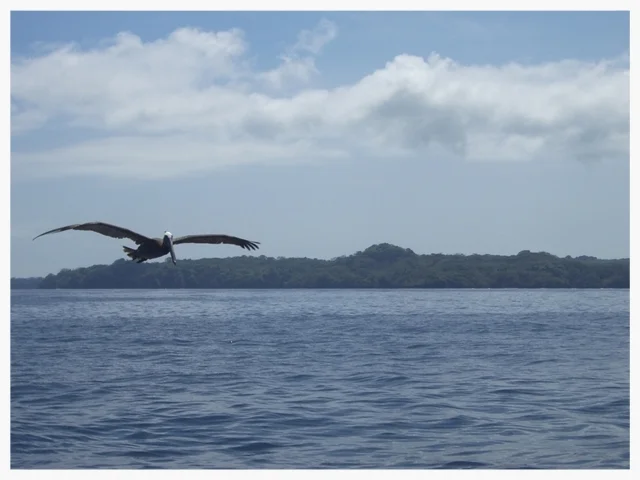
After finally leaving Panama, we headed for the Las Perlas island of Isla Pedro Gonzales for a rest before heading to the Galapagos. These islands are approx 35 nm from Panama City and have plenty of wild life and greenery. We anchored in a secluded bay north of the island to avoid the southerly swell. We had two nights of perfect weather. About 500m away there was another island that is a breeding colony for pelicans and other sea going birds. So there was no lack of bird watching to be had. We took the dingy across the reef & bay to the small village. Si wanted to replace the 10 liters of diesel we had used to get there. So after a couple of attempts (first attempt produced a black oily fuel) with an audience of about 20 we managed to get our fuel. Si also picked up a few more bottles of $6 rum……..(don’t ask how much wine, rum, vodka, tequila, whisky & gin we are carrying…for bartering so we say…).
After finally leaving Panama, we headed for the Las Perlas island of Isla Pedro Gonzales for a rest before heading to the Galapagos. These islands are approx 35 nm from Panama City and have plenty of wild life and greenery. We anchored in a secluded bay north of the island to avoid the southerly swell. We had two nights of perfect weather. About 500m away there was another island that is a breeding colony for pelicans and other sea going birds. So there was no lack of bird watching to be had. We took the dingy across the reef & bay to the small village. Si wanted to replace the 10 liters of diesel we had used to get there. So after a couple of attempts (first attempt produced a black oily fuel) with an audience of about 20 we managed to get our fuel. Si also picked up a few more bottles of $6 rum……..(don’t ask how much wine, rum, vodka, tequila, whisky & gin we are carrying…for bartering so we say…).
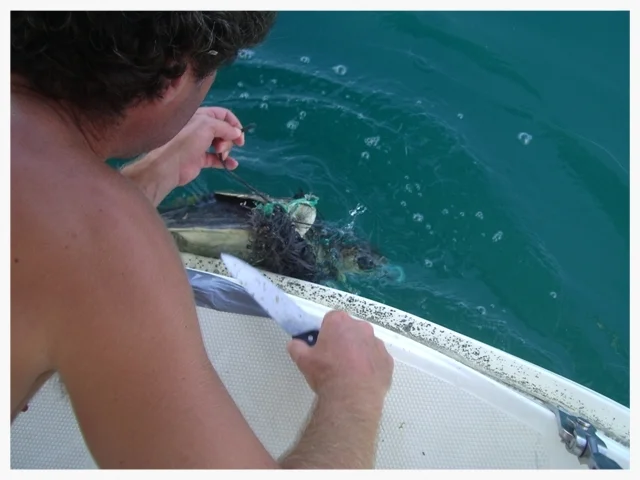
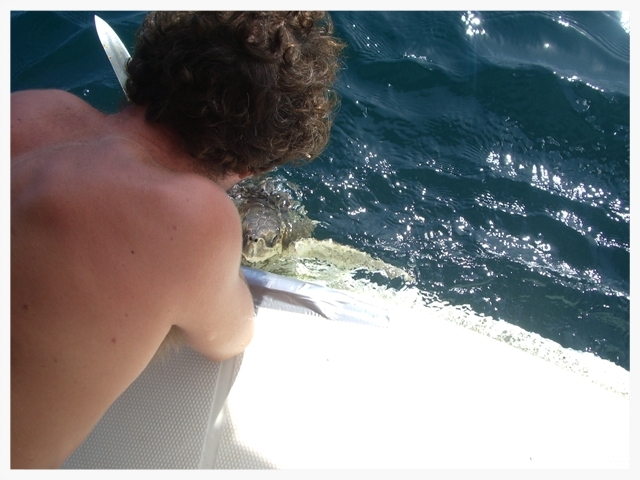
The next day we had a leisurely breakfast and decided to commence the 900nm passage to the Galapagos. It was very still and knew that we would be motoring. One thing that did surprise us was the amount of rubbish and crap in the ocean. We think it might be that it is the rainy season and a lot of debris is being washed into the ocean from the rivers. We would come across huge logs that would cause serious damage if you hit one. As we passed one of these garbage slicks, I noticed a sea turtle struggling along that had been caught in rope / net. We bought the boat around and Si managed to use the boat hook to bring the turtle to the back of the boat where he was able to cut the rope that had been tangled around his flipper. Hopefully he is Ok and his family was happy to see him.
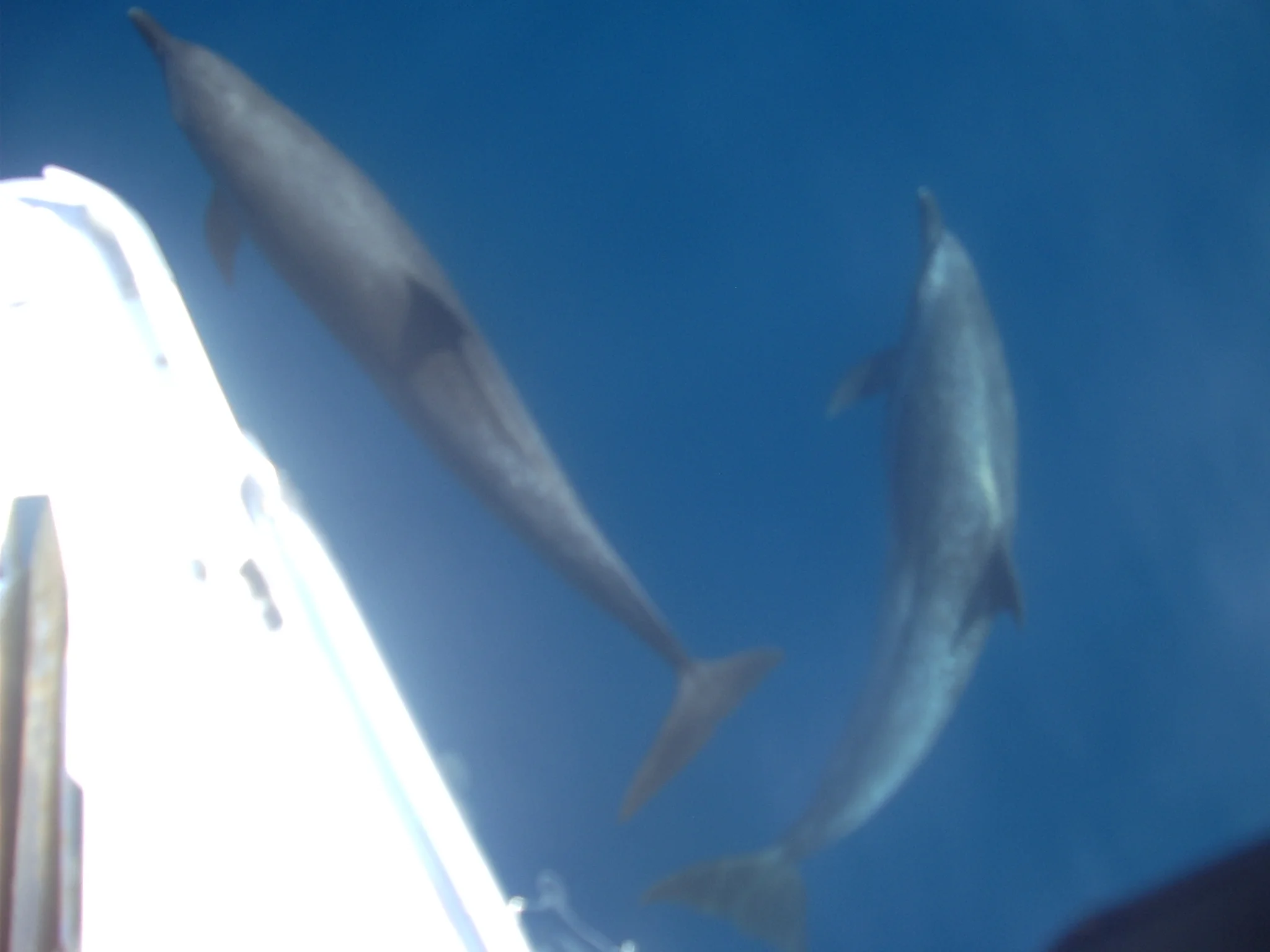
The rest of the day was quiet amazing. The sea was so calm it was like a huge lake. We would stand up on the bow and look in the water and even see fish. We saw the biggest pod of dolphins (ever). Because the sea was so calm, you could spot them a couple of miles away. There where probably about a hundred dolphins all doing their own thing. We had a few come and play around the boat but unfortunately they didn’t stay for long. Some were really big, brown in colour with white spots. We also sighted a lot of sting rays jumping out of the water. Quiet amazing!!
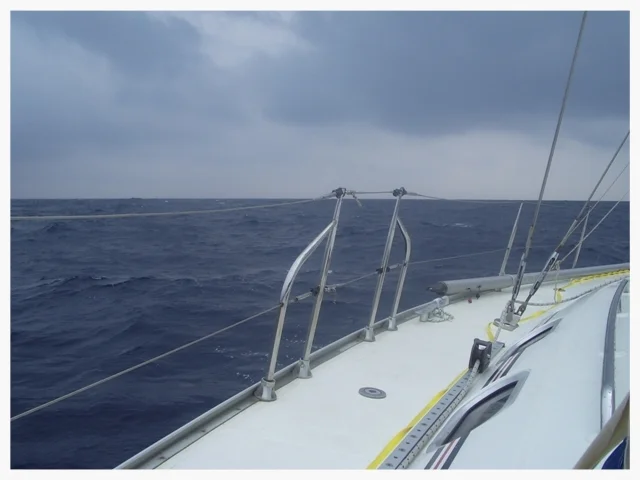
The passage to the Galapagos is relatively unpredictable as you travel through the ITCZ which is the convergence zone that is responsible for the doldrums, squalls, electrical storms and torrential rain. Just for good measure we experienced them all.
The second day out started with a nice 10kt breeze. We took on about 240 litres of additional fuel on top of our existing 250 litre tank, enough to motor for approx 6 of the expected 8 day passage (depending on usage & seas). Looking at the weather charts before departing indicated that the winds would be light so we were happy that we were getting some wind…or so we thought.
The next fours days were fairly tough. The wind dropped, while the swell and current increased. Unfortunately for us, not in our favour. We motored for most of the time. Due to being prudent with fuel, we were averaging about 3kts. I don’t know how many times we put the sails up and then had to take them down again. One evening Si woke up from a nap and got all excited as there was a bit of a breeze. We put the main up (with a reef thankfully as it was dusk) and then the head sail. Suddenly we were cracking 8 knots. Within 10 minutes of reefing the head sail, we were dead in the water again.
By day three, the rain had started and has continued on and off ever since. Due to the rain we started spent the majority of time in the saloon. With the pounding of the waves the front cabin was too noisy & rocky and the aft cabin was too noisy due to engine noise so the saloon was the best alternative. This was in addition to eating and using the PC instead of Plotter in cockpit. Preparing meals was no simple task. What ever you took out of the fridge generally fell back in with the addition of any thing else that was in the vicinity. Cooking had to involve one hand as you needed the other one to hold on. 2 minute noodles or what ever you could heat up in one pot was the general cuisine. Not quiet the champagne sailing we had coming through the Caribbean Sea.
By day six we started to get some wind but due to the rain fronts, although the wind shifts were still all over the place. Day seven the winds where a lot more consistent and really saw us pick up our speed to over 6kts. Three of the slides that hold the main broke off so we have only been sailing with the head sail…still we have managed to make some good head way.
Today is day nine at sea and will reach Wreck Bay, Isla San Cristobal at about 2pm tomorrow…9.5 days at sea…yay. We had a very busy day as we made pizza (…its Sunday..) and coconut pie to celebrate the crossing of the equator. The coconut pie was a little too adventuress and amazing that either of us didn’t end up wearing it. Both our shoulders were aching after the ordeal of trying to hang on. In the end it was well worth it. We crossed the equator around 6:45pm. We had a couple of little bottles of champagne to toast Neptune who was very appreciative of the coconut pie. Let’s hope he liked it enough to provide fair winds for the remainder of the trip. Mmm maybe I shouldn’t have given him the burnt bits.
Before signing off, I have to give special mention to our friends and stowaways that kept up along the way:
• Larry the Lizard: a green lizard we found onboard at Les Perlas. We can’t find Larry so we assume he jumped over board…can lizards swim?
• Jumping Squid: Minding my own business when something lops itself over my shoulder into the cockpit. It was a squid, one of several that landed on the boat that night…since when so squid jump?
• Ghost birds: Since leaving Les Perlas, we have several big sea birds that fly around the boat each night. The have white bodies and dark (possibly grey) heads that illuminate at night. They are fascinating to watch. What I want to know have they been the same birds for the entire trip?
• Lastly, Berty our stowaway who was a sweet little sea bird that last night got to close to the boat, hit her wing and lande. She rested for the day, stayed for the equator party, ate coconut pie (didn’t let her drink as she was flying) and flew away shortly after dark.
Panama to Galapogas Islands
After finally leaving Panama, we headed for the Las Perlas island of Isla Pedro Gonzales for a rest before heading to the Galapagos. These islands are approx 35 nm from Panama City and have plenty of wild life and greenery. We anchored in a secluded bay north of the island to avoid the southerly swell. We had two nights of perfect weather. About 500m away there was another island that is a breeding colony for pelicans and other sea going birds. So there was no lack of bird watching to be had. We took the dingy across the reef & bay to the small village. Si wanted to replace the 10 liters of diesel we had used to get there. So after a couple of attempts (first attempt produced a black oily fuel) with an audience of about 20 we managed to get our fuel. Si also picked up a few more bottles of $6 rum……..(don’t ask how much wine, rum, vodka, tequila, whisky & gin we are carrying…for bartering so we say…).
After finally leaving Panama, we headed for the Las Perlas island of Isla Pedro Gonzales for a rest before heading to the Galapagos. These islands are approx 35 nm from Panama City and have plenty of wild life and greenery. We anchored in a secluded bay north of the island to avoid the southerly swell. We had two nights of perfect weather. About 500m away there was another island that is a breeding colony for pelicans and other sea going birds. So there was no lack of bird watching to be had. We took the dingy across the reef & bay to the small village. Si wanted to replace the 10 liters of diesel we had used to get there. So after a couple of attempts (first attempt produced a black oily fuel) with an audience of about 20 we managed to get our fuel. Si also picked up a few more bottles of $6 rum……..(don’t ask how much wine, rum, vodka, tequila, whisky & gin we are carrying…for bartering so we say…).
The next day we had a leisurely breakfast and decided to commence the 900nm passage to the Galapagos. It was very still and knew that we would be motoring. One thing that did surprise us was the amount of rubbish and crap in the ocean. We think it might be that it is the rainy season and a lot of debris is being washed into the ocean from the rivers. We would come across huge logs that would cause serious damage if you hit one. As we passed one of these garbage slicks, I noticed a sea turtle struggling along that had been caught in rope / net. We bought the boat around and Si managed to use the boat hook to bring the turtle to the back of the boat where he was able to cut the rope that had been tangled around his flipper. Hopefully he is Ok and his family was happy to see him.
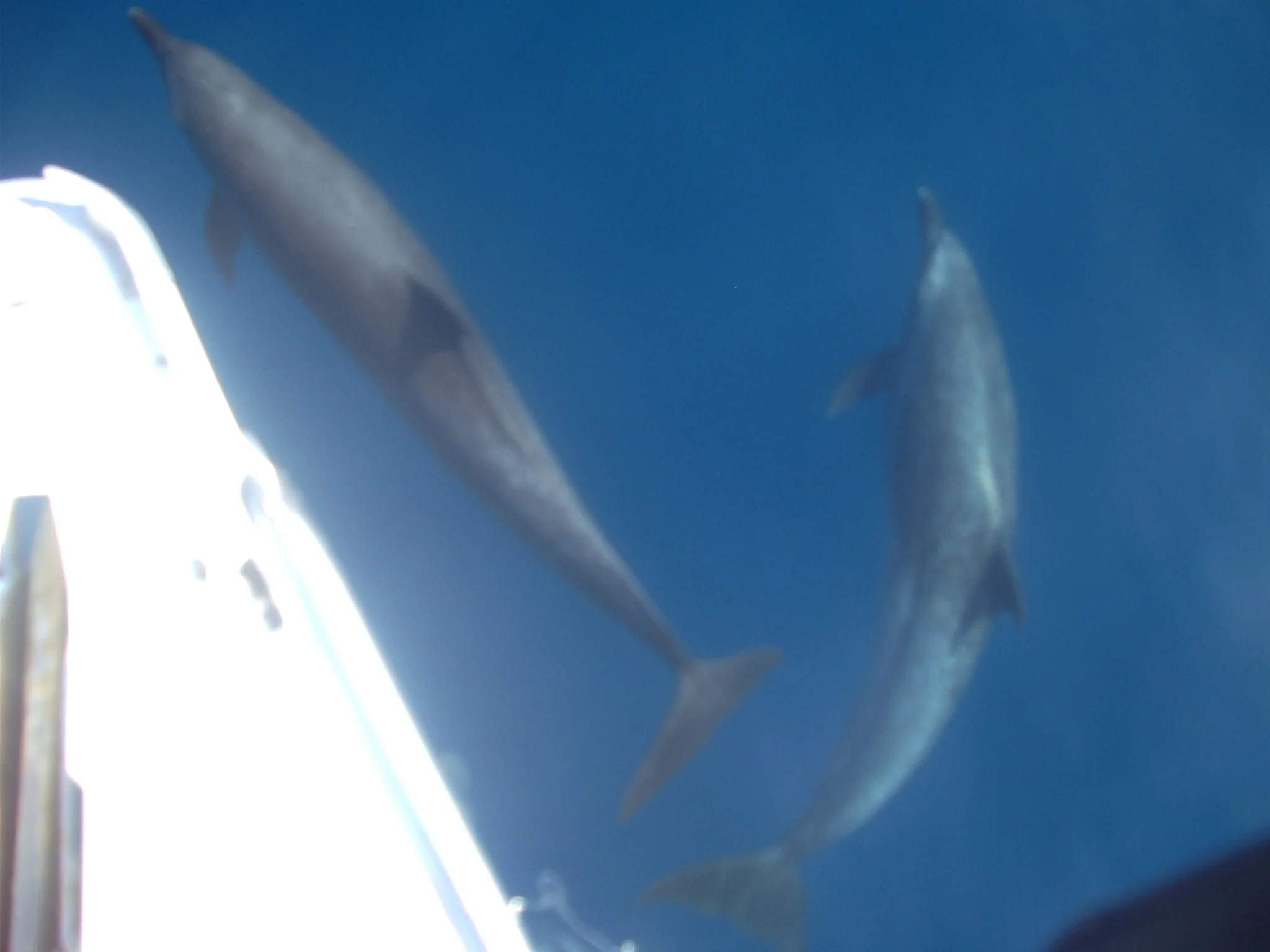
The rest of the day was quiet amazing. The sea was so calm it was like a huge lake. We would stand up on the bow and look in the water and even see fish. We saw the biggest pod of dolphins (ever). Because the sea was so calm, you could spot them a couple of miles away. There where probably about a hundred dolphins all doing their own thing. We had a few come and play around the boat but unfortunately they didn’t stay for long. Some were really big, brown in colour with white spots. We also sighted a lot of sting rays jumping out of the water. Quiet amazing!!
The passage to the Galapagos is relatively unpredictable as you travel through the ITCZ which is the convergence zone that is responsible for the doldrums, squalls, electrical storms and torrential rain. Just for good measure we experienced them all.
The second day out started with a nice 10kt breeze. We took on about 240 litres of additional fuel on top of our existing 250 litre tank, enough to motor for approx 6 of the expected 8 day passage (depending on usage & seas). Looking at the weather charts before departing indicated that the winds would be light so we were happy that we were getting some wind…or so we thought.
The next fours days were fairly tough. The wind dropped, while the swell and current increased. Unfortunately for us, not in our favour. We motored for most of the time. Due to being prudent with fuel, we were averaging about 3kts. I don’t know how many times we put the sails up and then had to take them down again. One evening Si woke up from a nap and got all excited as there was a bit of a breeze. We put the main up (with a reef thankfully as it was dusk) and then the head sail. Suddenly we were cracking 8 knots. Within 10 minutes of reefing the head sail, we were dead in the water again.
By day three, the rain had started and has continued on and off ever since. Due to the rain we started spent the majority of time in the saloon. With the pounding of the waves the front cabin was too noisy & rocky and the aft cabin was too noisy due to engine noise so the saloon was the best alternative. This was in addition to eating and using the PC instead of Plotter in cockpit. Preparing meals was no simple task. What ever you took out of the fridge generally fell back in with the addition of any thing else that was in the vicinity. Cooking had to involve one hand as you needed the other one to hold on. 2 minute noodles or what ever you could heat up in one pot was the general cuisine. Not quiet the champagne sailing we had coming through the Caribbean Sea.
By day six we started to get some wind but due to the rain fronts, although the wind shifts were still all over the place. Day seven the winds where a lot more consistent and really saw us pick up our speed to over 6kts. Three of the slides that hold the main broke off so we have only been sailing with the head sail…still we have managed to make some good head way.
Today is day nine at sea and will reach Wreck Bay, Isla San Cristobal at about 2pm tomorrow…9.5 days at sea…yay. We had a very busy day as we made pizza (…its Sunday..) and coconut pie to celebrate the crossing of the equator. The coconut pie was a little too adventuress and amazing that either of us didn’t end up wearing it. Both our shoulders were aching after the ordeal of trying to hang on. In the end it was well worth it. We crossed the equator around 6:45pm. We had a couple of little bottles of champagne to toast Neptune who was very appreciative of the coconut pie. Let’s hope he liked it enough to provide fair winds for the remainder of the trip. Mmm maybe I shouldn’t have given him the burnt bits.
Before signing off, I have to give special mention to our friends and stowaways that kept up along the way:
• Larry the Lizard: a green lizard we found onboard at Les Perlas. We can’t find Larry so we assume he jumped over board…can lizards swim?
• Jumping Squid: Minding my own business when something lops itself over my shoulder into the cockpit. It was a squid, one of several that landed on the boat that night…since when so squid jump?
• Ghost birds: Since leaving Les Perlas, we have several big sea birds that fly around the boat each night. The have white bodies and dark (possibly grey) heads that illuminate at night. They are fascinating to watch. What I want to know have they been the same birds for the entire trip?
• Lastly, Berty our stowaway who was a sweet little sea bird that last night got to close to the boat, hit her wing and landed in the cockpit. She rested for the day, stayed for the equator party, ate coconut pie (didn’t let her drink as she was flying) and flew away shortly after dark.
Panama Canal Transit
The big day had finally arrived. No matter how much you read and speak to people about the Panama Canal transit, the whole thing still seemed like a daunting task.
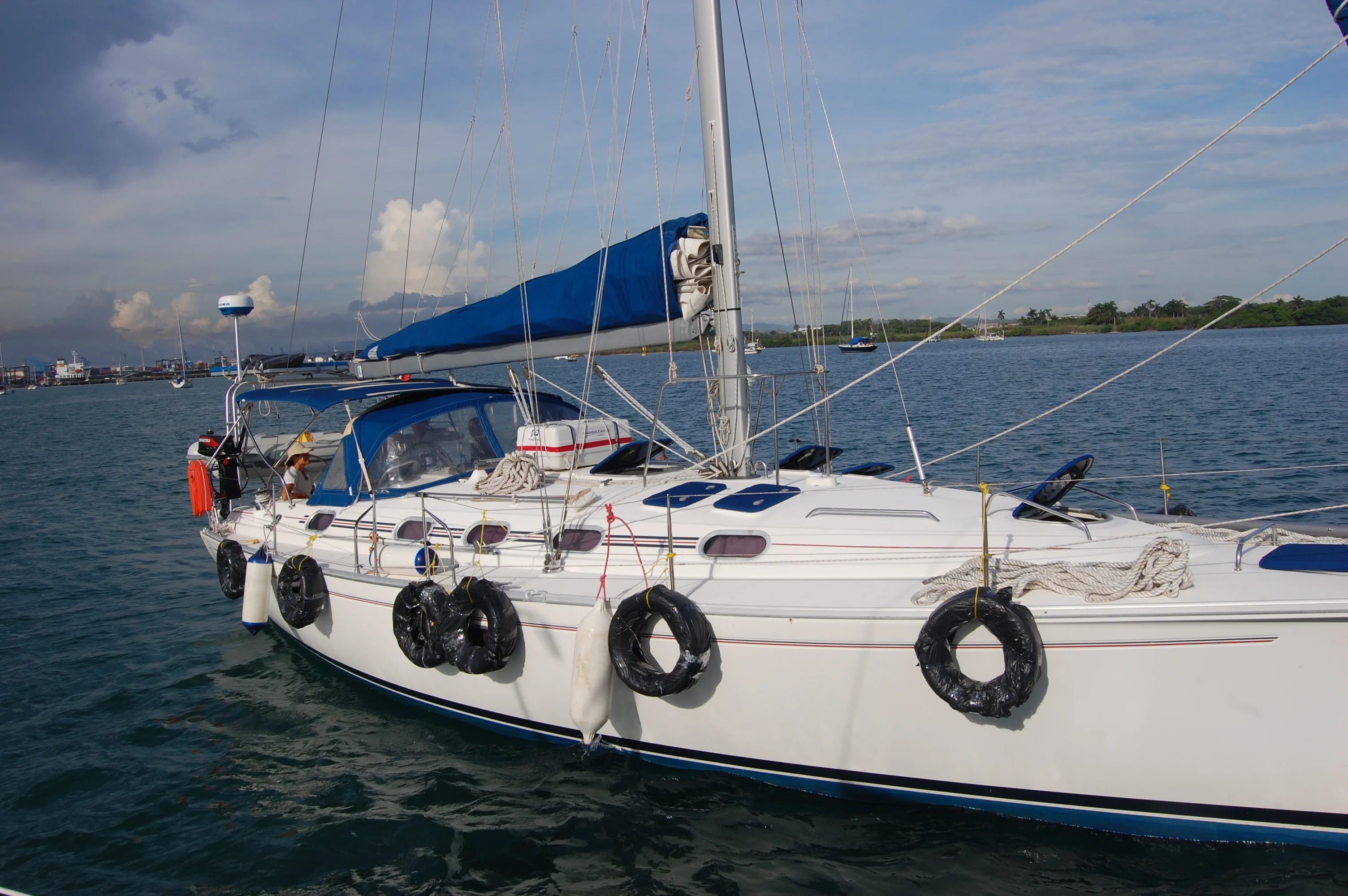
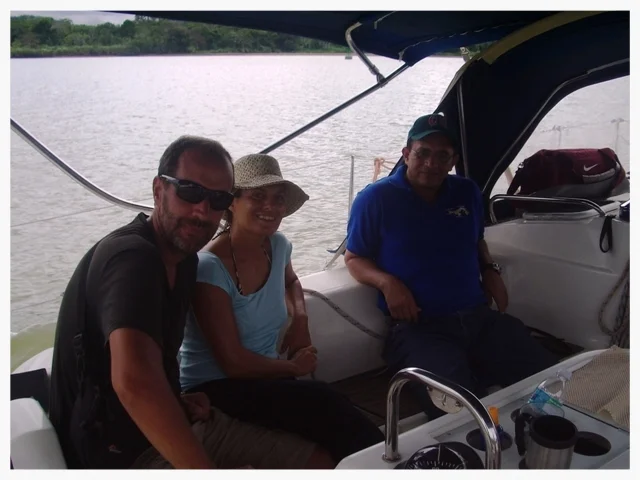
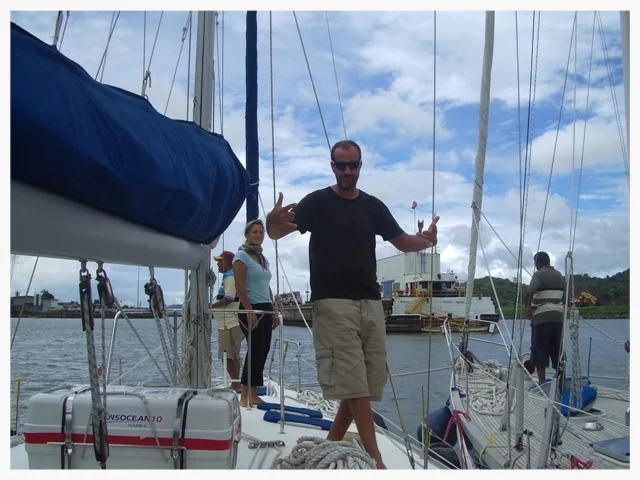
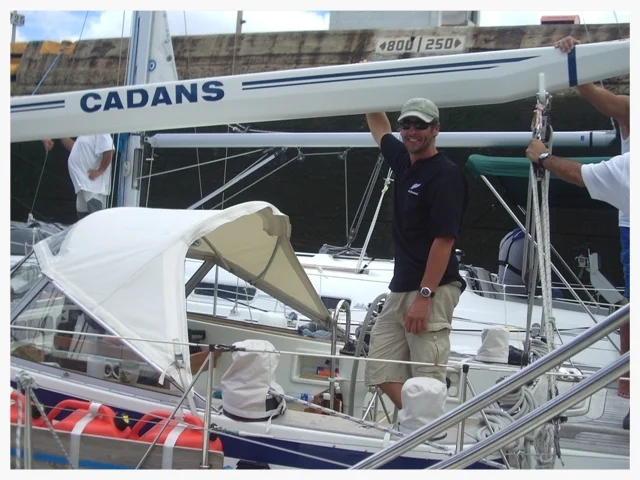
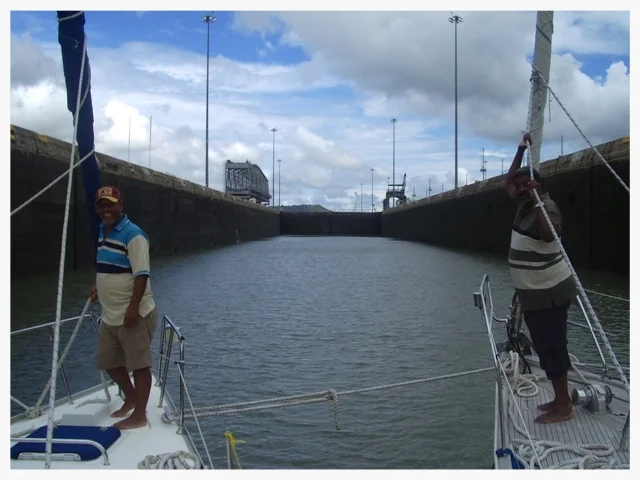
Firstly you need one captain, four line handlers and an advisor (from the Canal Authority). Jen and Ulf from Sea Quill, who we met on the way back from San Blas, kindly assisted with the lines. We also hired Rudy as our fourth lines person. Whilst in Colon, Rudy was our personal assistant, taxi driver & general advisor. He is Panamanian with many years experience transiting the locks.



The big day had finally arrived. No matter how much you read and speak to people about the Panama Canal transit, the whole thing still seemed like a daunting task.
Firstly you need one captain, four line handlers and an advisor (from the Canal Authority). Jen and Ulf from Sea Quill, who we met on the way back from San Blas, kindly assisted with the lines. We also hired Rudy as our fourth lines person. Whilst in Colon, Rudy was our personal assistant, taxi driver & general advisor. He is Panamanian with many years experience transiting the locks.
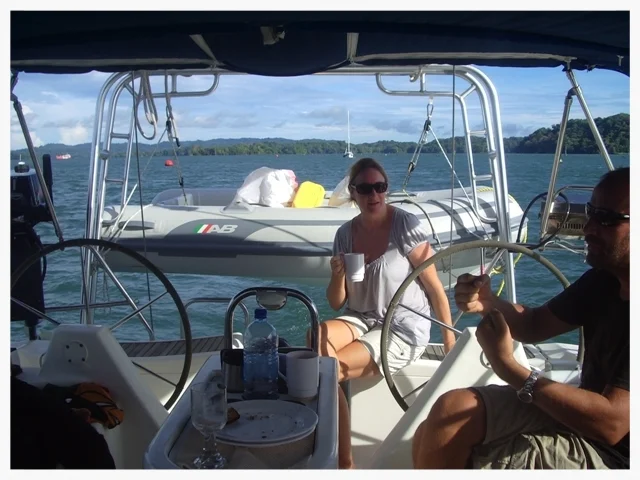
We where scheduled to pick up the advisor at 4.30pm at “The Flats”, outside the Panama Yacht Club. We arrived around 4pm and drifted for a few hours whilst waiting for the advisor, who came on board around 6.30pm (they are always late). We were fortunate that out pickup time was relatively early as we have know some cruiser to pick up their advisor until 10pm at night.
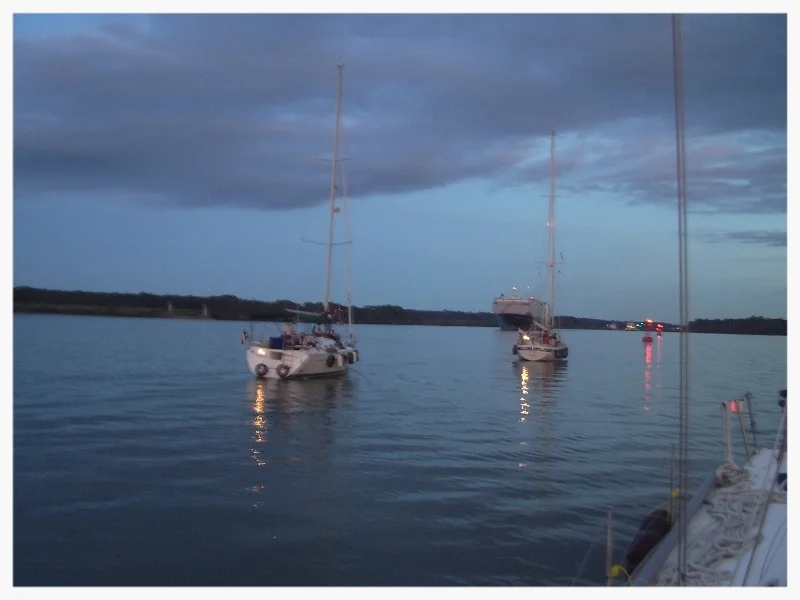
Three yachts where scheduled to go through: Cadans, Woodsia and some guys from Venezuela who had a 39” Beneteau. As the sun was setting over Colon, we commenced the short trip to the first set of locks. The first three locks gravity feed water in so that you rise well above sea level. About 1km before entering, the three boats have to be rafted together. Cadans was in the middle with us on her port side.
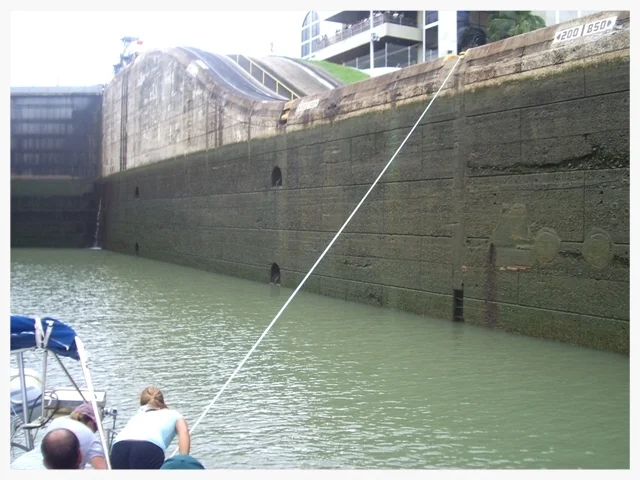
As you enter the lock, there are two linesmen onshore who throw you a monkey fist ( a ball at the end of a line) that you tie to your bow and stern lines. We had been warned that they can aim for just about any where on the boat so we covered up our solar panels as a precaution. Once you have attached your lines, they walk your lines to each loch, pull your line up and secure it to a bollard.
Once you are attached, the water starts to rise and you have to keep the tension on the lines to ensure that the three yachts remain central and don’t come too close to the sides. Jen, Ulf and myself seemed to do all the work as the yacht on the other side just sat there and let there lines go slack. The first set of lochs went well and we made it through with out any problems. When it came to derafting the three boats, just as we where set loose, a large wake from a passing pilot vessel came through. We got away unscathed but the Beneteau & Cadans were still rafted, they rocked violently, rigging touched but no damage was done.
It took about an hour and a half to get through the first set of lochs. We then motored for about 20 minutes and arrived at a huge man made lake for the night. We tied up to a donut buoy for the night at around 9.30ish. The advisor warned us not to swim due to the croc’s! Once we arrived, we prepared pizza for supper…then disaster struck. As I was putting grounded black pepper on the second pizza before putting it in the oven, the grinder broke and the pepper corns went every where. We lost about a third of the pizza. With an additional mouth to feed (the advisor invited him self to dinner) we got creative with the BBQ chicken. It may not seem a big deal but we had been discussing the menu for weeks…but we made it through.
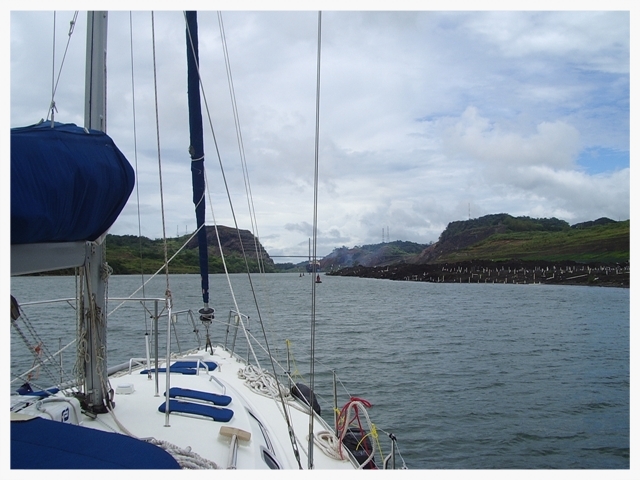
The advisor was dropped off at 7.30am. The next set locks are 28nm from our mooring buoy. We had sensational weather. Slightly overcast which protected us from the blazing sun. The trip through the water ways is really beautiful, with much of it being national park. You forget where you are until you see a huge ship mosey on by.
The remaining three locks release water from the locks so that you eventually return to sea level. It was also a lot less work as you have to release the line rather than take up on it. We had an audience as there was about 100 people standing around the numerous viewing platforms watch us make our decent. We also waved madly at the internet video cameras in hope that someone from home was watching.
As we got to the final lock, we hoisted our boxing kangaroo flag up the mast and put on the Men At Work classic “Down Under” (OS Aussie national anthem). It was a very emotional moment as the last lock opened to the Pacific. Not only was it a great achievement to get this far, but is also over whelming when you think about what is ahead……all part of the adventure.
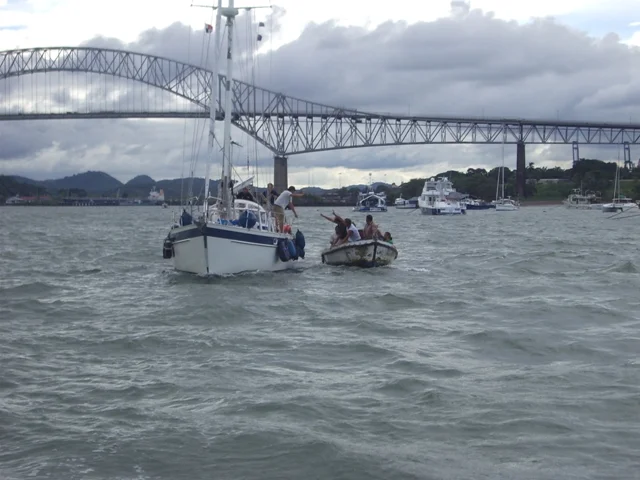
We made our way down to the Balboa yacht club whilst having some celebratory champagne. To drop off our advisor we had to meet a tug boat for a boat to boat transfer. We also bid a sad farewell to Jen, Ulf and Rudy who were picked up in a water taxi. There was a strong southerly swell and the yachts at the club were really pitching. We decided to see if we could find a nicer anchorage on the other side of the causeway. We motored around to the Flaminco marina and anchored on the other side of the breakwater. Had a few more celebratory drinks on Cadans before calling it a night….and rolled all night (I don’t think there is such a thing as a calm anchorage on the Pacific side)..
The next day we moved to the Flaminco marina to wait for the bad weather to pass. There was a tropical low near Mexico that was pushing a lot of rain and wind our way. On day four, fully stocked and provisioned, we headed to Las Perlas on route to the Galapagos.
Panama
After another night of watching big ships pass us by we arrived at Panama on Sunday 27th April. We passed through the breakwater into a very large harbour then made our way to “The Flats” near the Panama Yacht Club. It is the popular anchorage used by yachts waiting to transit the Canal. After a few celebratory drinks with Greg and Dan from Cadans, we went ashore to have a look around. Within the first 10 minutes of speaking to a few cruisers, a couple of themes started to emerge. Firstly, crime in Colon is rife. Apparently an Aussie guy had been shot
After another night of watching big ships pass us by we arrived at Panama on Sunday 27th April. We passed through the breakwater into a very large harbour then made our way to “The Flats” near the Panama Yacht Club. It is the popular anchorage used by yachts waiting to transit the Canal. After a few celebratory drinks with Greg and Dan from Cadans, we went ashore to have a look around. Within the first 10 minutes of speaking to a few cruisers, a couple of themes started to emerge. Firstly, crime in Colon is rife. Apparently an Aussie guy had been shot a couple of nights mugs trying to steal his bag. Two days after our arrival, a catamaran anchored about 50 meters away, had their 15hp outboard motor stolen from their dingy (hoisted on the davits). Needless to say, we didn’t feel safe. The second thing, was that it looked like we would be hanging around Panama for awhile. We met some cruisers that had arrived two days previously and have been given a transit date two months in the future. We were in shock. A two month delay meant that we would have to make haste across the Pacific with very few stops. We met a number of people that had been waiting for 6 weeks and it looked like the delays were getting worse.
The morning that we were due to get our transit date, I took the dingy ashore in to do the laundry. There was a buzz of excitement in the ranks. By some miraculous event, everyone had their transit dates moved forward by a month. How lucky were we!
In order to transit the canal the authority must physically measure the vessel. An official from the authority came on a pilot vessel to measure Woodsia however he didn’t board us, he just asked to meet us at the yacht club in 20 minutes. We obliged, completed some paper work and subsequently issued a transit date - 3rd June (without being measured). Only one month away. A few days past and our transit date had been moved forward (the latest date being the 24th May). We are really looking forward to getting through to the other side so we can start focusing on our trip to the Galapagos.
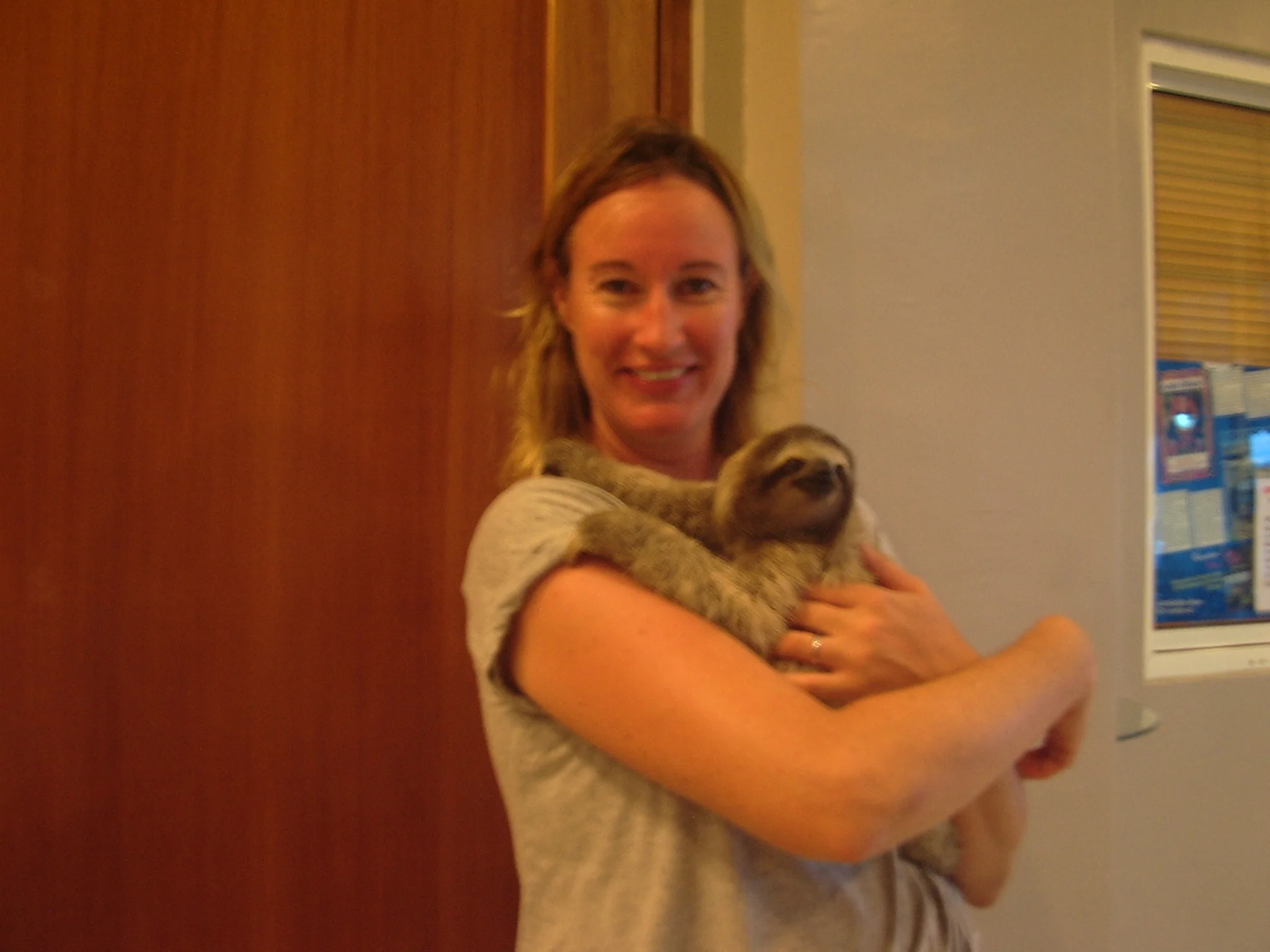
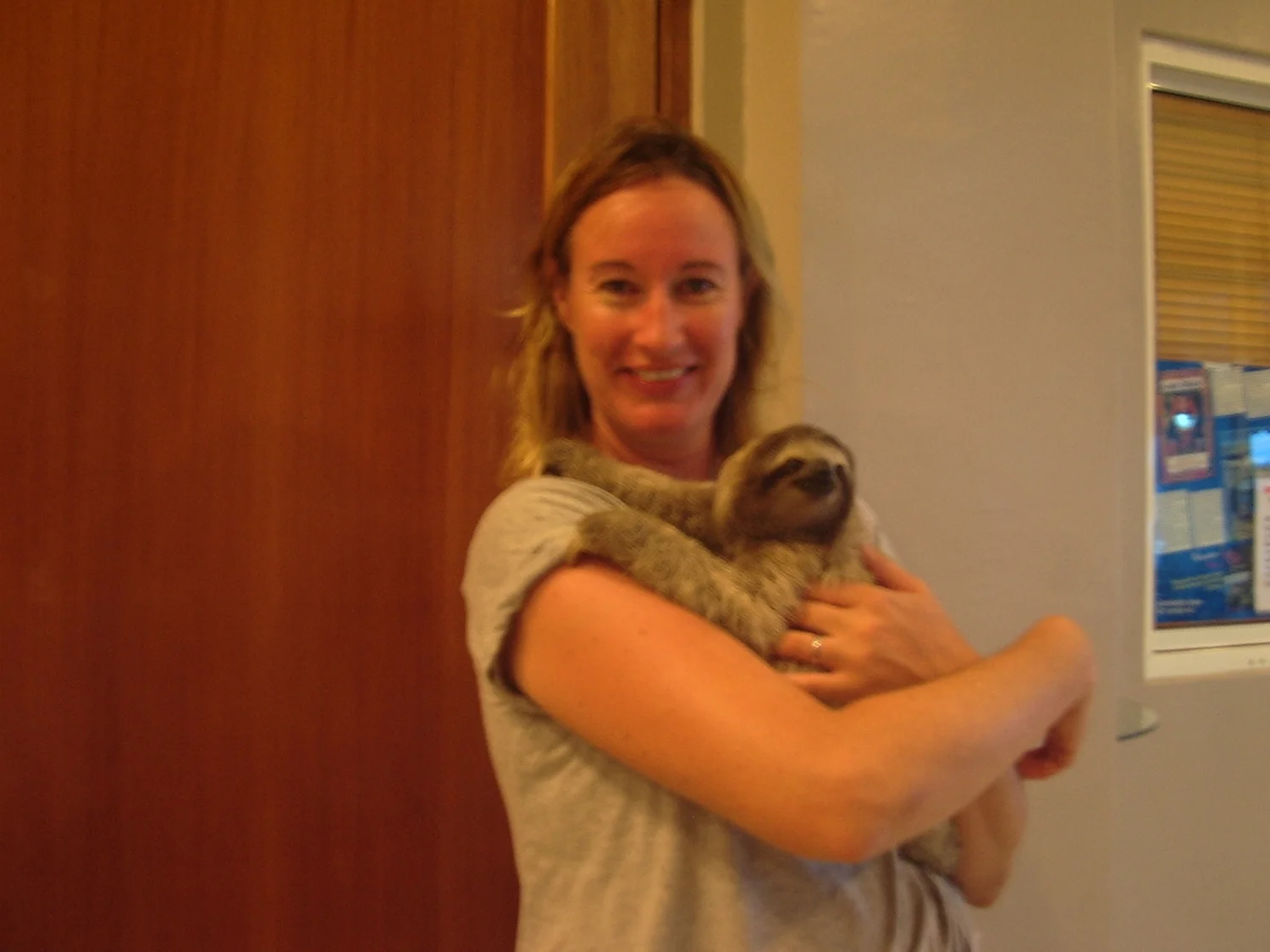
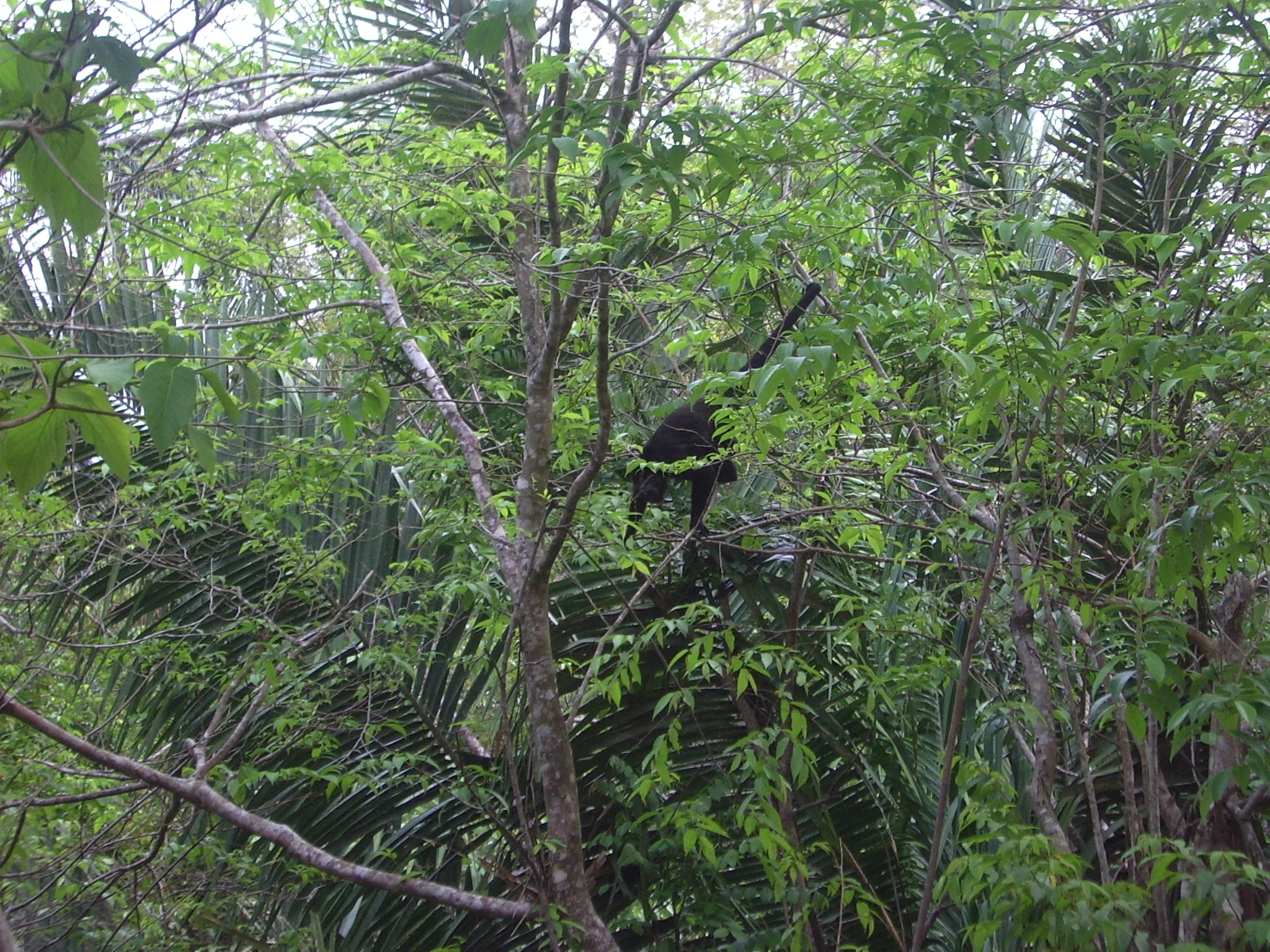
After four days anchored on “The Flats”, we moved to the marina located on other side of the harbour. It is a hike out of town (about 40 mins by taxi plus frequent delays when crossing the canal (Gatun Locks) but it is safe and quiet with some great amenities. It is located in a National Park so have done a few walks to check out the local wild life. There are heaps of monkeys and the odd snake. There is even a baby sloth that resides at the marina. The baby sloth was rescued after its mother was killed. He is so cute…just like a soft toy. The marina is new, secure and clean a vast contrast to the tired and worn out yacht club.
So after ten days of attacking the never ending to do list…oil changes, getting the sail bag patched, provisioning, provisioning, provisioning, we headed for the San Blas islands for a well deserved rest. We departed with little wind and motored most of the 70 nm trip stopping overnight at Portobelo and Isla Grande on the way. Portobelo was visited by Columbus in 1502 and is also where Captain Drake (the pirate) was buried. It is a beautiful bay surrounded by jungle clad hills, most of which have been fortified at some time by the Spanish. The next morning we woke to the sound of howler monkeys in the jungle. The town was a little disappointing as it is dirty and broken. Just as we left the dingy dock, some local pushed a fridge filled with rubbish into the water and set fire to it. I must say, that they are not very ecologically aware. Isla Grande was also lovely and the town is a lot cleaner. We had a great day exploring the island and stopped at the Bob Marley bar for a beer…every village in the Caribbean has one.
The San Blas are very unique and in total contrast to the jungle terrain that is prevalent for most of the Panama coast line. The first distance sighting of the San Blas was unimpressive as they are small flat islands covered in coconut trees. We made our way to Chichime Cays, one of 130 islands in the group. We had to negotiate several reefs to enter the one and only entrance. I was busy trying to take photos while Si was yelling at me to stop and look for the reefs to help navigate the
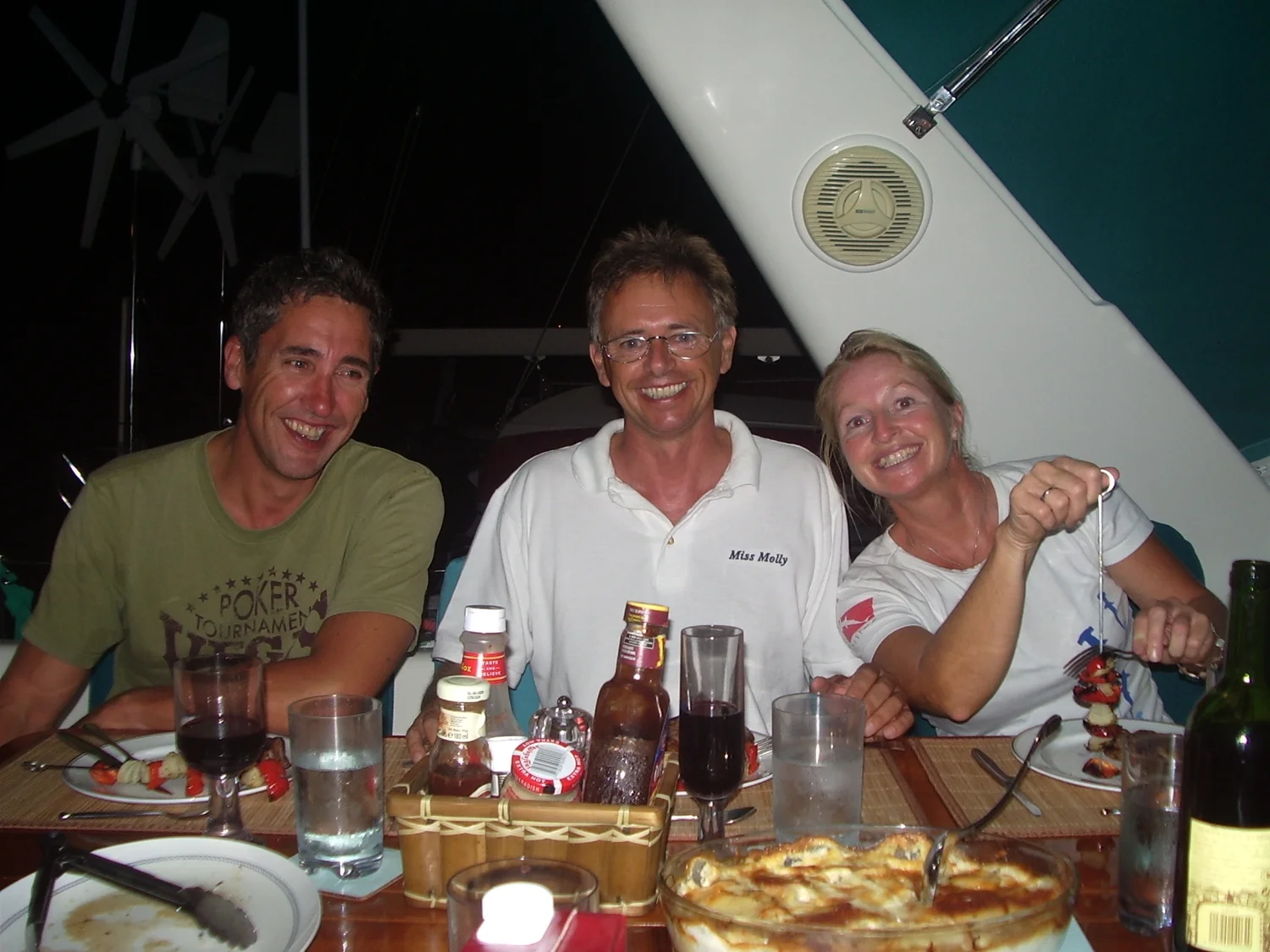
unmarked channel……….oops. As you get closer you really get the feel for what a true tropical island is; aqua water, white sands, coconut palms swaying in the wind….stunning. We got an extra surprise when we came across Miss Molly (Meryl and Geoff) anchored near by. The San Blas is owned by the indigenous Kunas. Much of their culture is unchanged from prior the Spanish Conquista. We anchored between two islands, both inhabited with several people, mostly women. They make molas as part of their traditional clothing that they wear as a sort of bodice. Molas are hand sewn patch work decorations using many different designs. These are sold to visiting yachts and provide the village with a good income. The villages are out in their canoe even before you have a chance to put your anchor down. Some women can get quiet pushy and we met some cruisers who found it an effort to keep them off their boat. Si was impressed with one guy who had his own business card and was even equipped with fenders to keep his canoe from marking the customer’s yacht. He certainly does make beautiful molas.
We spent the next six days not doing much at all. We got to know our neighbours (Kunas) who live in grass huts, we even charge their mobile phones. The locals would come around and sell fish, crays and tropical fruit. We did buy a few crays ($2.50 - $5 each) only to find out later that it is illegal as the catching of them is out of season…but they were so good. We swam, snorkelled and explored the local islands… you can walk around them in 15 minutes.
I must admit that in our laziness we did not explore any of the other areas. We figured that there was nothing else we needed. Also if we went to another island, we would get bothered by more mola sellers. One day was enough. So we eventually set sail for Colon via Isla Linton. Another gorgeous island that is close to Isla Granda. Here we met Jen and Ulf who had been cruising for 18 months and had been struck by lightning five days earlier while in the San Blas. We went ashore and had a great meal at a local restaurant run by a Dutch fellow and his Columbian wife.
A day later, we were back in Colon (Shelter Bay Marina). The marina was humming as the round the world Clipper fleet had arrived. The poor marina was close to over flowing as each Clipper yacht had at least 15 crew. The marina bar, restaurant & internet couldn't cope with the influx (normally only 2 people per cruising yacht). As they pulled out the next day, the skies opened up and rained solidly for the next 10 hours…I don’t think I have seen so much rain!!!
The next day (Monday), we headed for Panama City for a romantic getaway. We stayed in a restored boutique hotel in the old district of Panama City. It was such luxury…flushing toilet, air conditioning, no mosquitos, plasma tv and a big fluffy doona. We went to a great restaurant around the corner that did great tapas but without a menu. The food just kept on coming and coming and coming. The next day we went to the Canal museum (located next door our hotel) and were hosting a visiting Rembrandt exhibition….sensational. The rest of the day was spent at the shopping mall. We both bought a few tops to spruce up our wardrobes. I could have gone crazy at Zara’s but it is a bit hard to justify long flowing dresses and sexy silk tops. Must say that Panama is an amazing place to visit and have welcomed the opportunity to get to see some of this beautiful place. I guess there is always a next time.